Before You Buy an AI Tool, Ask These 6 Questions
6 questions separate a real AI capability from a better demo: data, output, governance, ROI, upgrade path and ownership. Ask them before you buy.
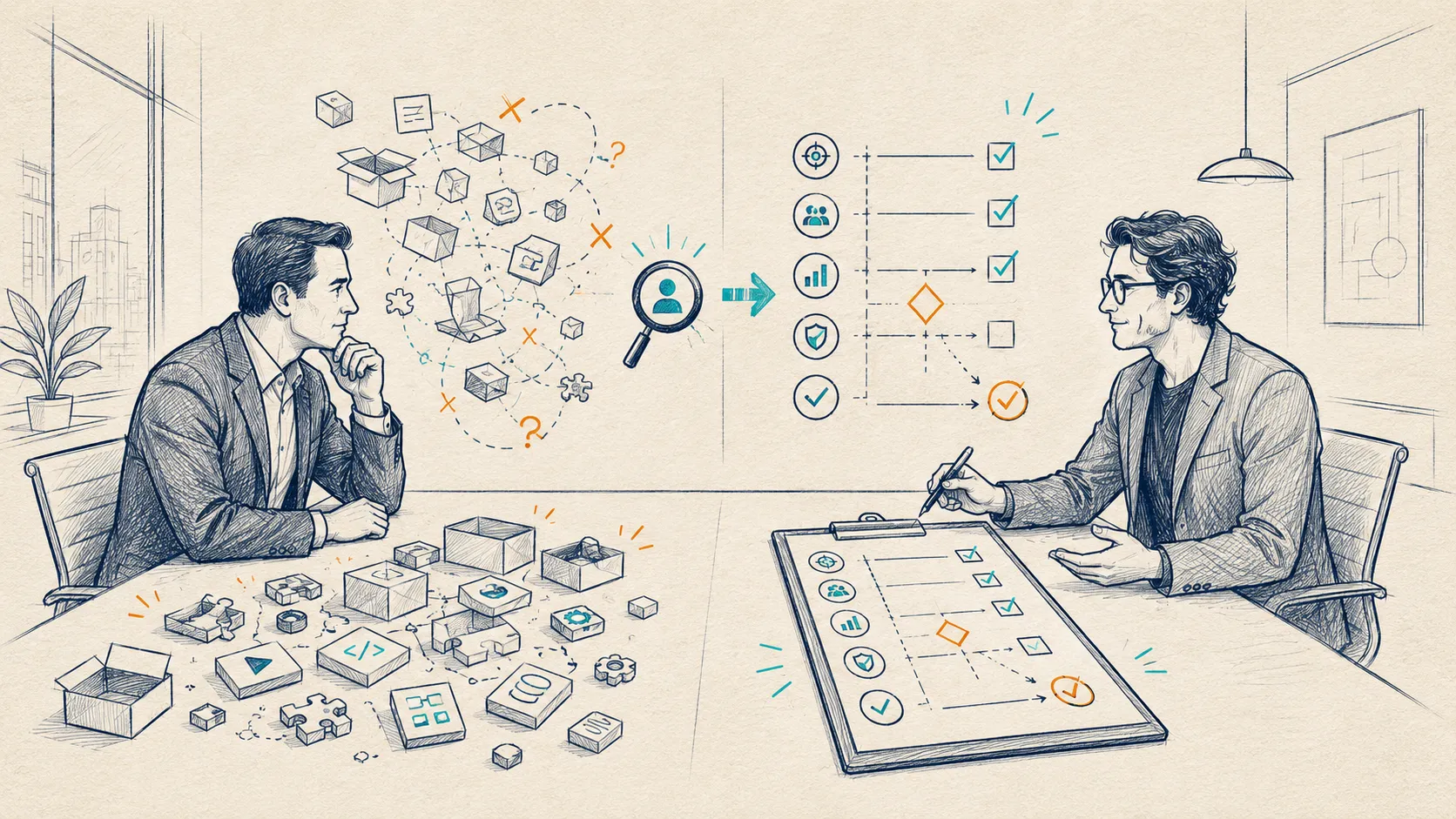
Short answer: before you buy an AI tool, have clear answers on 6 things: data, output, governance, ROI, upgrade path and ownership.
The other day I told a business owner I work in AI. His first question was, “What tool are you selling?” That question is the whole problem. Leaders have started thinking of AI as a tool when it is a system, a workflow, an operating layer that makes the work better. If one tool could fix everything, one giant tool would already exist. SaaS happened because each product solved a specific problem the others did not.
So when a leader says “we need an AI tool,” what I usually hear is “we want a quick fix for a problem we think is important.” The sharper question is whether the answer is even a tool, or an agentic workflow, a forecasting model, a data-capture layer, a process redesign, or no AI at all. That is the same choice as picking between an agent, a workflow and plain automation, asked one level earlier. Buying the wrong one of those is exactly the AI confusion tax I keep seeing companies pay.
What Is the Trap of Buying Disconnected AI Tools?
The common mistake is buying several AI tools when the business needs one workflow it can extend. A tool that cannot integrate becomes another island. A tool that extends into adjacent work becomes leverage. Ask what workflow you are improving and what existing system AI should extend, and which kind of intelligence the problem actually needs, before you ask what to buy. Collecting disconnected tools is how you end up a tourist in your own stack, which I cover in AI tool tourism.
Which Kind of AI Vendor Are You Talking To?
There are 3 kinds of AI vendors right now. Tool vendors build and implement one specific tool. Agentic vendors understand automation, but many hear “workflow” and immediately reach for an agent without grasping the whole business problem. The third kind understands the pain first and will tell you whether you need a tool, an agent, a model, a data layer, a redesign, or nothing. That third kind is the most valuable. A one-hour call with them can save more than the cost of any tool, because they stop you from buying into the wrong problem.
What Is the 6-Question Buying Scorecard?
If these 6 do not have clear answers, you are not buying an AI capability. You are buying uncertainty with a better demo.
1. What data are you working with?
AI is Y = f(X). The X has to exist before anything useful comes out as Y. A good vendor asks about the mess: scattered across systems, inconsistent but partially tracked, or a field you never captured. If the data does not exist at all, the answer is not an AI tool. It is instrumentation, capture, and process discipline.
2. What real output are you creating?
Name the concrete output and the decision it feeds. A forecast that no one acts on is not output. This is the same trap behind a lot of failed AI projects: a technically fine model that changes no decision.
3. What governance model do you have?
Hallucination, explainability, auditability, escalation, and human review depend on how the solution is built and how good the data is. A tool can be fine for a POC without these. Once you scale it, missing governance becomes missing control. I wrote about why governance is a design problem, not a policy problem.
4. Which ROI pillar does it improve?
ROI is more measurable than people claim when you break it into pillars: time, money, efficiency, customer satisfaction, product, and strategic position. If a vendor cannot say which pillar the tool moves, the purchase is hard to defend. And ROI tracks the scale of the problem. If the problem is cheap, solving it will not produce a 5x return.
5. What is the upgrade strategy?
This is not software updates. It is how the process and your mental model improve over time in a VUCA world. A strategy describes a path from A to B that is both followable and trackable. If it is neither, it is not a strategy.
6. Who owns the workflow, data, decision, and outcome?
Without ownership you can buy a tool, run a POC, and still have no accountable system for making the result useful. SAP HANA is the classic case: many companies bought it and never got the ROI, because the data ownership, treatment, and integration were never settled. The label changes with AI, the failure mode does not.
What Red Flags Should You Watch for in the Demo?
Two patterns should slow you down. First, a demo that only works on the vendor’s perfectly prepared data. Ask what happens when your data is messy, incomplete, or missing a field. Second, a product that is a thin wrapper over an LLM. If your own team can build the same thing with a prompt and a light codebase, it is probably not worth buying. A tool earns its price when it brings a real domain layer: business customization, ROI logic, integrations, and governance built around the work. This is the same reason GenAI is a plier, not every job’s tool.
When Should You Build Instead of Buy?
If you can build it inside your own codebase in 1 to 3 months, do not buy it. Build when the problem sits inside your capability: clear business problem, enough structure, a tech or contract team. A small internal build is often faster, cheaper, and better aligned than an off-the-shelf product, because it is shaped around your real workflow and data. Do not build what is outside the box, like a foundation model from scratch. And whoever you put on the evaluation matters as much as the tool, which is its own decision in who should explore AI tools.
The right people in the early room are business, technology, operations, the work owners, and the data owners. The data owner especially, because only they can tell you the data is messy and whether the tool will still work. I have seen this decide whether a project ever produces value, like the demand-planning work in this forecasting case, where the win came from aligning inputs across functions, not from the model alone.
What to do this week
- List the AI tools you are about to buy, or already run.
- Next to each, answer the 6 questions in one line.
- Mark any question the vendor cannot answer. That is your negotiating list, or your reason to wait.
Frequently asked questions
What are the 6 questions to ask before buying an AI tool?
What data are you working with? What real output are you creating? What governance model do you have? Which ROI pillar does it improve? What is the upgrade strategy? Who owns the workflow, data, decision and outcome?
Why do companies buy an AI tool and still get no value?
They bought a demo before understanding the work behind it. Without clear answers on data, output, ownership and ROI, there is no accountable system for making the result useful.
What red flags should slow you down in a demo?
A demo that only works on the vendor's perfectly prepared data, and a product that is a thin wrapper over an LLM. Ask what happens when your data is messy, incomplete or missing a field.
When should you build instead of buy?
If you can build it inside your own codebase in 1 to 3 months, do not buy it. Build when the problem sits inside your capability: a clear business problem, enough structure and a tech or contract team.
Is this where your AI is leaking?
A 30-minute Clarity Call shows where the logic between your data and your decisions breaks. No pitch, no deck.
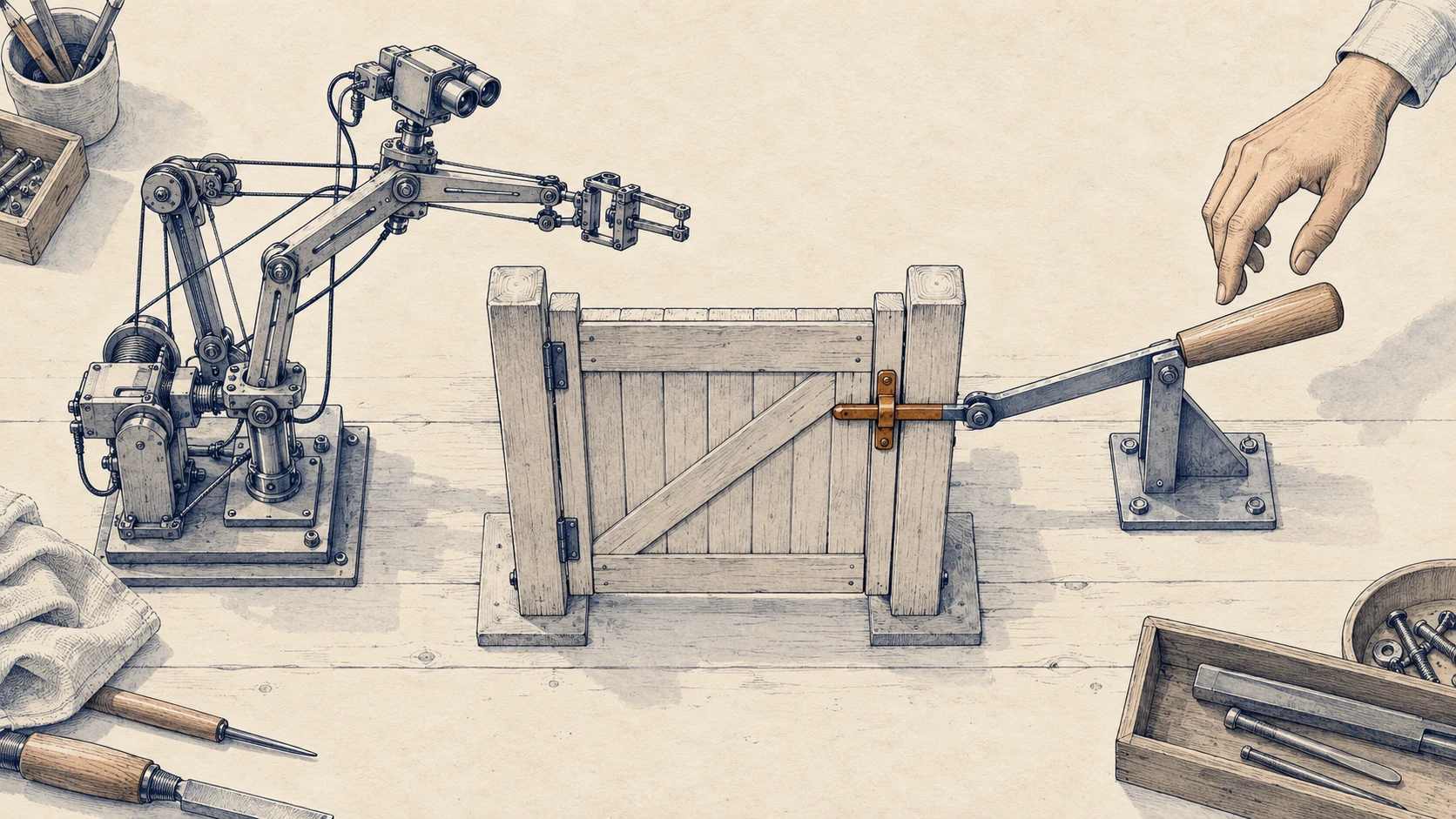
Framework
Do You Need an AI Agent, an AI Workflow or Automation?
Most “I need an AI agent” requests need an AI workflow or plain automation. 3 questions show which, before you build the wrong one. Ask them separately.

Framework
Is GenAI Just a Pair of Pliers in Your AI Strategy?
GenAI is excellent for language and weak for math, optimization or network problems. Name the problem class first, then pick the right tool from the toolbox.
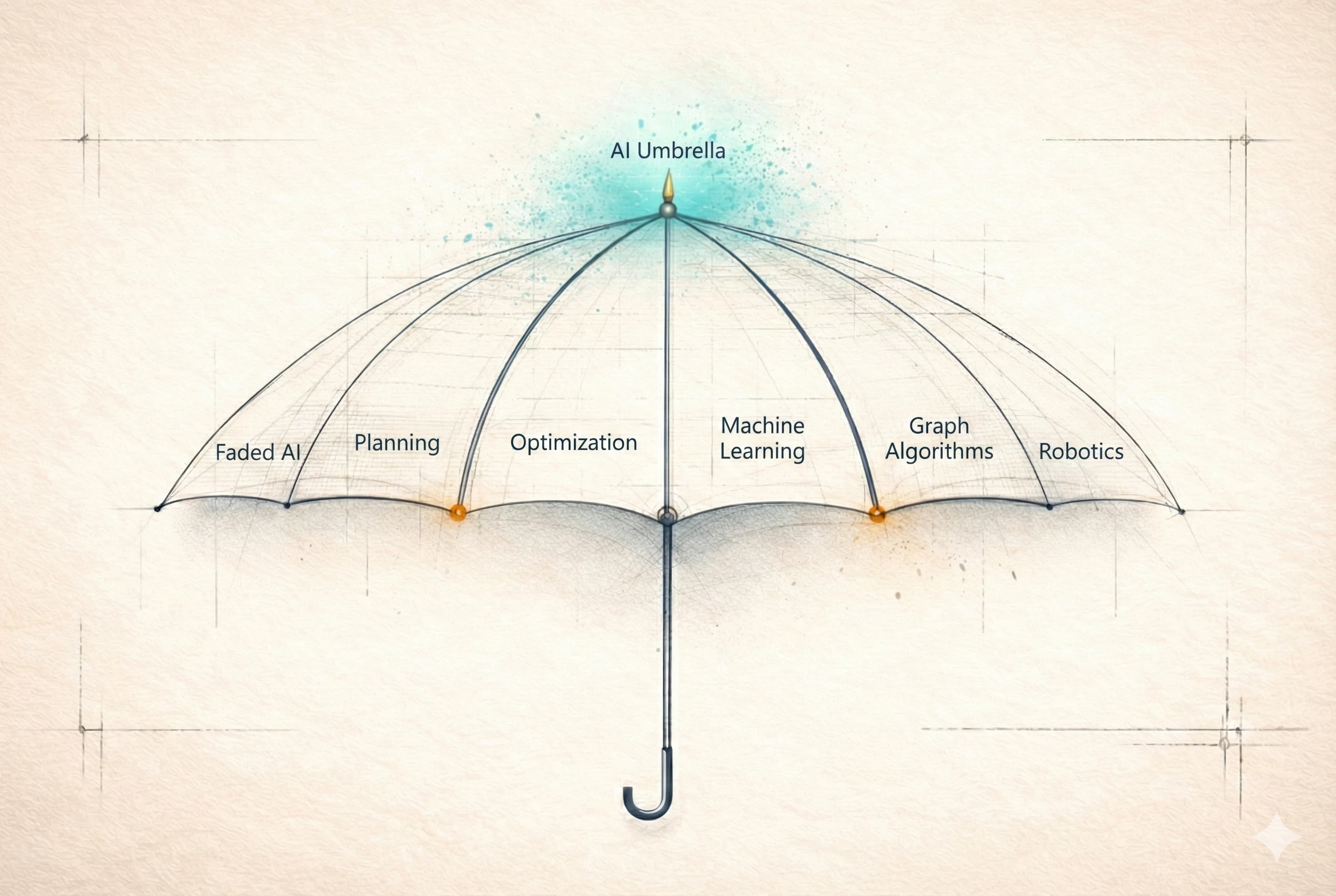
Framework
The AI Umbrella: Which Part of AI Does Your Problem Need?
AI is a toolbox, not one gadget. The AI Umbrella maps 5 pillars, from machine learning to optimization. GenAI is about 8.6% of the AI market.
The Weekly AI Decision Brief